
Some people’s lenses look blue, some look purple, and some look green. The blue light blocking glasses recommended to me are yellow. So why do blue light blocking lenses turn yellow? Optically speaking, white light is composed of seven colors, none of which can be missing.
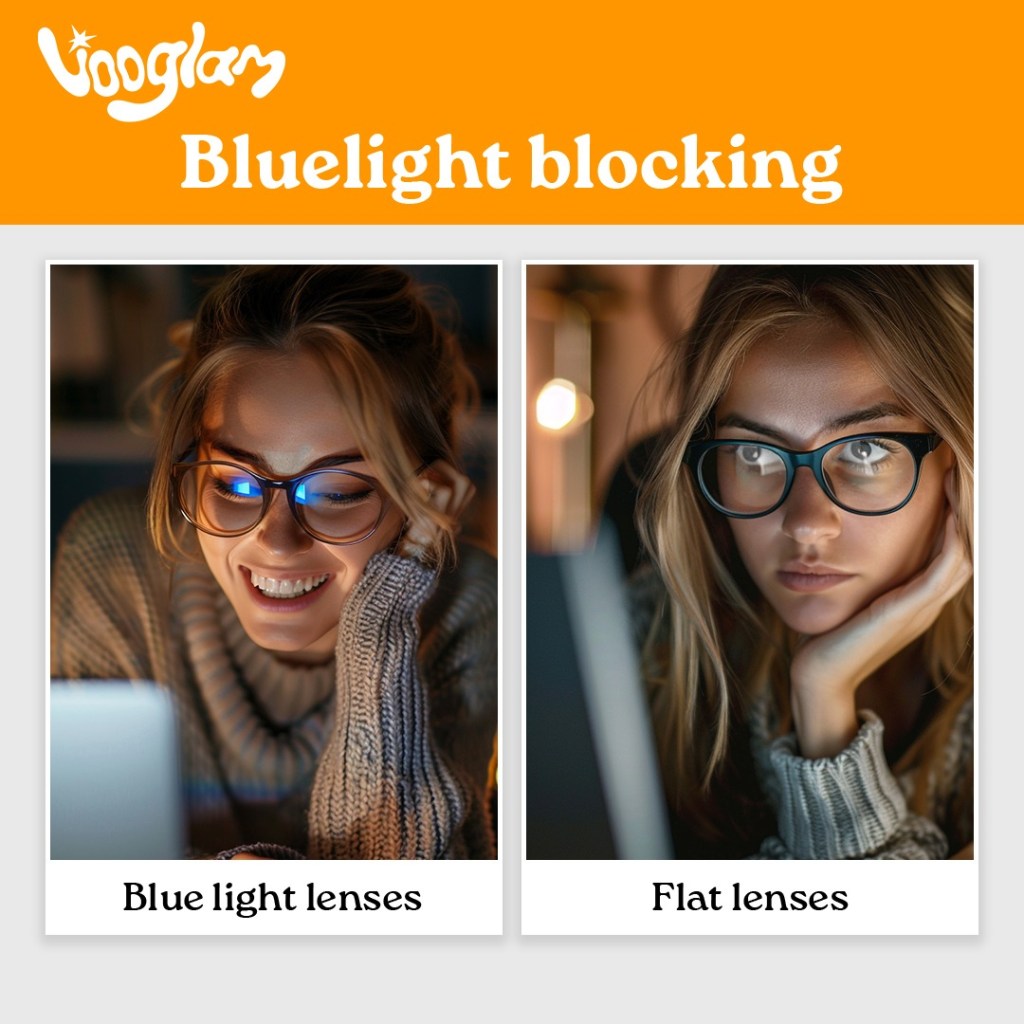
Blue light is an important component of visible light, and there is no separate white light in nature. Blue light is mixed with green light and yellow light to present white light. Green light and yellow light have less energy and are less irritating to the eyes, while blue light has a short wavelength and high energy, which is more irritating to the eyes.
In terms of color, blue light blocking lenses will show a certain color, which is concentrated in light yellow. So if colorless lenses advertise that they can resist blue light, it is basically a scam. Because filtering blue light means that the spectrum received by the eyes is incomplete compared to the natural spectrum, so there will be color difference. The amount of color difference depends on the perception range of each person and the quality of the material of the lens itself.
So, is the darker the lens color, the better? In fact, transparent or dark yellow lenses cannot effectively block blue light, while light yellow lenses can block blue light without affecting the passage of normal light. This may be easily overlooked by many friends when buying anti-blue light glasses.
Imagine that if more than 90% of blue light is blocked, it means that you can basically not see white light, so you can tell whether it is good or bad for your eyes? The quality of the lens depends on the refractive index, dispersion coefficient, and film layers with different functions. The thinner the lens with a high refractive index, the higher the dispersion, the clearer the view, and the different film layers are mainly for anti-ultraviolet rays, anti-blue light of electronic screens, anti-static, dust, etc. Here, the editor recommends that you choose Essilor.
Experts say: “Blue light radiation is high-energy visible light with a wavelength of 400-500 nanometers, which is the light with the strongest energy in visible light. High-energy blue light is 10 times more harmful to the eyes than ordinary light.” This shows how powerful blue light is! Vooglam anti-blue light lenses are developed and marketed for blue light radiation. With a special film design, the blue light blocking rate reaches more than 35%, which can effectively filter blue light. Essilor dual-effect protective lenses have been gaining popularity among anti-blue light lens products, and their comprehensive and effective anti-ultraviolet function adds a lot of points to them.
 HappyVogue: Your Fashion Destination for Trendy Styles & Inspiration